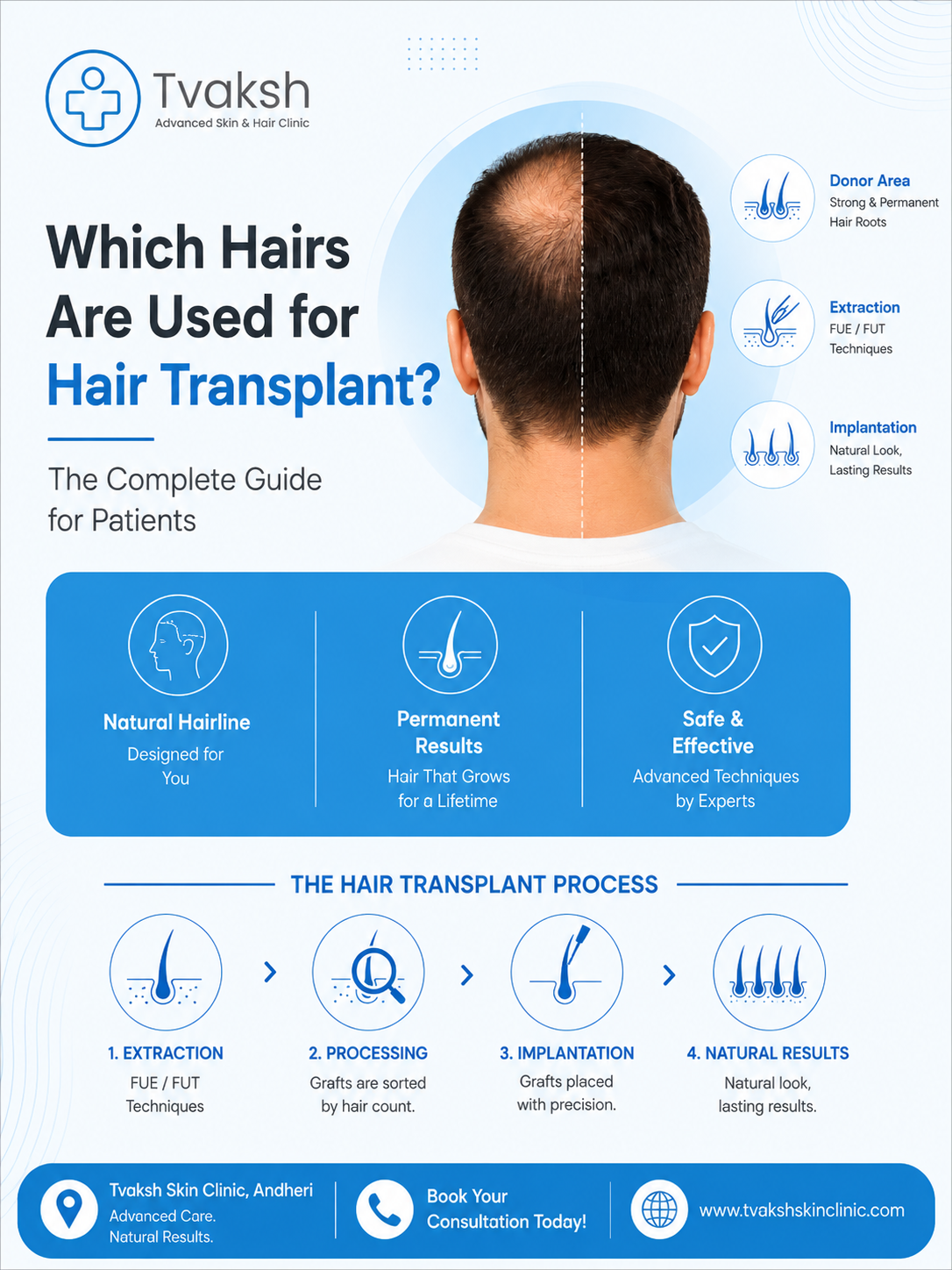
If you’re considering a Hair Transplant Andheri, one of the first questions that comes to mind is where does the new hair actually come from? Many patients assume hair is simply “added” to the scalp, but the truth is more interesting, and understanding it can help you set realistic expectations about your results.
Understanding the Basics – In Hair Transplants, Which Hair Is Used?
At its core, a hair transplant Andheri doesn’t create new hair, it redistributes hair you already have. Surgeons move hair follicles from areas where growth is strong to areas affected by hair loss or balding. The hair used must come from your own body, which is why understanding your available donor sources is the first step in planning any procedure.
The Donor Area: Where It All Begins
The donor area sits at the back and sides of the scalp. These follicles resist DHT, the hormone that causes male pattern baldness. Even after relocation, they keep growing for life. Doctors call this donor dominance.
Your surgeon checks donor hair density during consultation. This determines how many grafts they can safely remove without thinning the back of your scalp.
FUE vs FUT: How Hair Is Extracted
Surgeons use two main techniques to harvest hair.
- FUE (Follicular Unit Extraction) removes individual follicles with a small punch tool. Tiny, dot-like marks remain, barely visible even with short hair. Many patients prefer this method for its minimal scarring.
- FUT, or the strip method, removes a thin strip of scalp. Technicians then divide it into follicular units under a microscope. This approach can yield more grafts per session, though it leaves a linear scar.
Both techniques use your own hair they simply differ in the collection method. Anyone comparing Hair Transplant Mumbai clinics should understand both options before choosing a surgeon.
How the Hairs Are Processed (Grafts)
Hair naturally grows in small clusters called follicular units. Each unit holds one to four hairs. After extraction, technicians sort these into grafts by size:
- 1-hair grafts go along the hairline for a soft, natural edge
- 2-hair grafts sit just behind the hairline for gradual density
- 3–4 hair grafts fill the mid-scalp and crown for fuller coverage
This sorting affects both appearance and graft survival rate.
- Body Hair Transplant: An Alternative Source
For patients with limited scalp donor supply (often due to advanced hair loss or previous surgeries), body hair transplant can be an option. Hair from the beard, chest, or even legs can sometimes be used to supplement scalp grafts.
However, body hair has different growth characteristics it’s often finer, curlier, and grows at a different rate than scalp hair. For this reason, it’s typically used to add density rather than form the hairline, where natural-looking results matter most.
- Beard Hair: A Popular Donor Option
Beard hair transplant has become increasingly common, especially for patients who want to add volume to the crown or fill in patches where scalp donor hair is insufficient. Beard hair tends to be coarser, which can actually work well for creating texture and fullness in certain areas.
Why Hairline Design Matters
Hairline design shapes how natural the final result looks. A Best Hair Transplant Surgeon in Andheri studies growth direction, graft angle, and placement carefully. This attention ensures transplanted hair blends with existing growth.
Can Hair From Another Person Be Used?
No. Hair transplant surgery uses only autologous hair, your own. Your immune system would reject hair from another person, similar to organ transplant rejection. The body attacks foreign tissue before follicles can establish a blood supply.
This rules out a few options patients often ask about:
- Donor hair from another person – rejected by the immune system
- Synthetic hair fibers – not biologically integrated; carries infection risk
- Hair from identical twins – still carries rejection risk; rarely used
Your own hair remains the only viable resource. This makes donor area planning essential.
Why Choose Tvaksh Skin Clinic, Andheri
Tvaksh Skin Clinic in Andheri starts every Hair Transplant Andheri procedure with a detailed assessment. Specialists evaluate your donor area, hair type, and extent of hair loss first. They then build a plan around natural hairline design, graft placement, and density.
The team handles both FUE and FUT, choosing whichever suits your situation best. Patients seeking a hair transplant in Andheri get guidance from consultation through aftercare.
Final Thoughts
The source matters less than the principle: your own resistant follicles deliver natural, lasting growth. Scalp, beard, or body hair can all play a role depending on your needs.
Every patient’s hair and scalp differ. A proper evaluation beats guesswork every time. The team at Tvaksh Skin Clinic takes time to assess your case before recommending a plan.